Narok County, Kenya

You can power a clinic where mothers give birth by phone flashlight.

$5,000 gives one clinic backup power for 7 years. 15 clinics need you.

$0 raised $75,000 goal
Donate Now
<$105
Per life-year saved
150K
Lives protected
15
Engineers trained
7 yr
Battery lifespan

What happens when the lights go out.

Picture a mother in a small clinic in Narok County, Kenya. She is in the middle of giving birth. Then the power goes out. No lights. No fetal monitor. No oxygen concentrator. No way to sterilize tools. The nurse pulls out her phone and uses the flashlight.

A woman's lifetime risk of pregnancy-related death in sub-Saharan Africa is 1 in 55, approximately 250 times higher than in Western Europe. Sub-Saharan Africa accounts for 85% of the world's unelectrified population, with 451 million rural residents still without electricity. A randomized study of rural health facilities in Uganda found that reliable electricity averted an estimated 61% of maternal deaths. These are not isolated problems. They are compounding failures that converge in the delivery room.
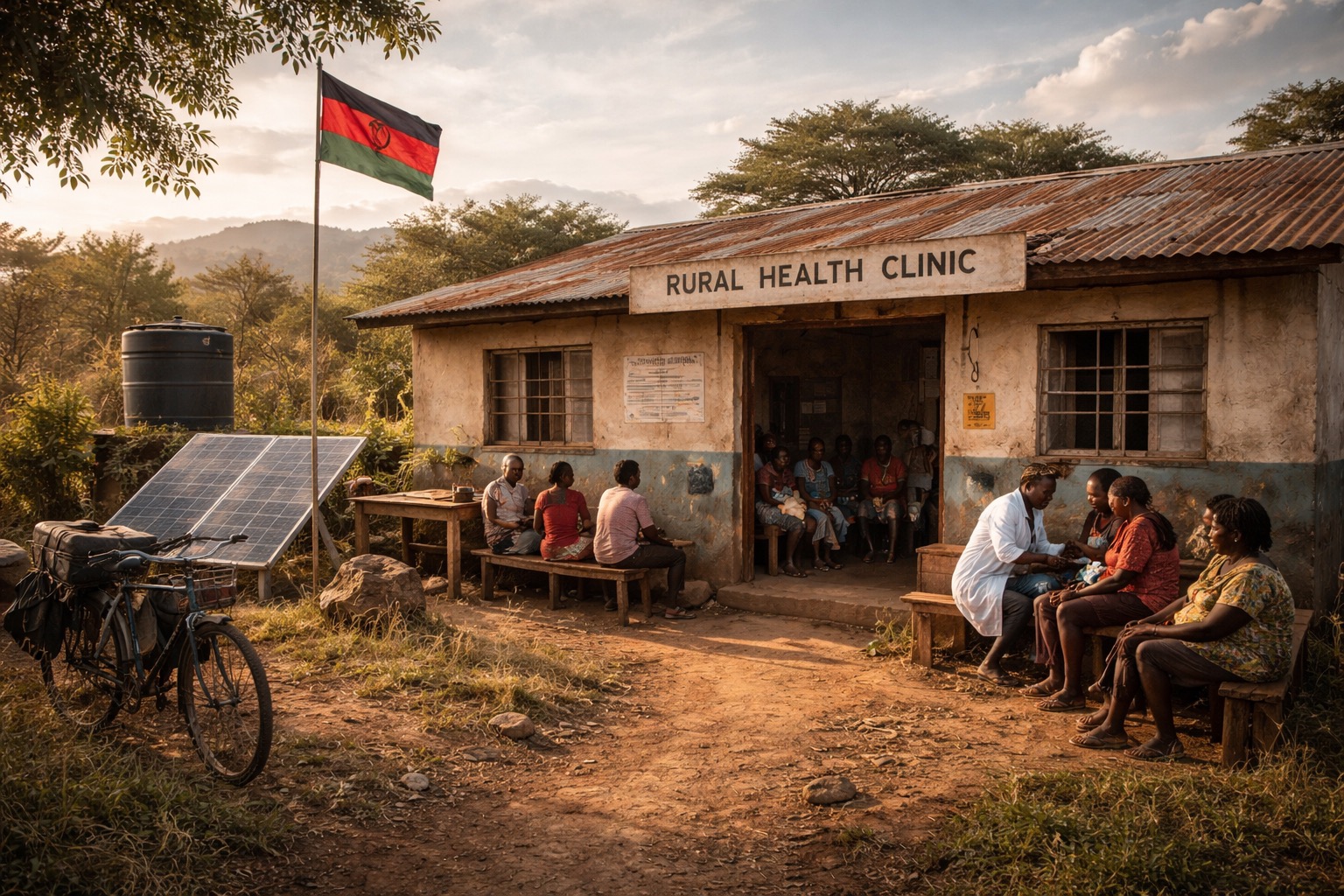
208 outages per year
At Olosho-Oibor Dispensary, serving approximately 3,000 patients with a single nurse-midwife, experiencing 4 to 6 power outages per week lasting 2 to 6 hours each. 57% of operating hours are lost to power outages.
"Hospital mortality risk increases 43% per outage day exceeding two hours." Apenteng et al., 2018
Olosho-Oibor Dispensary in Narok County, Kenya

Olosho-Oibor Dispensary, Narok County. One of 15 clinics that will receive backup power through this pilot.

What changes with backup power.

Current Situation

Today

  • No lights during delivery
  • No fetal monitors running
  • Vaccines spoil in outages
  • Oxygen concentrator off
  • No equipment sterilization
With BioKite

With BioKite

  • Lights stay on through outages
  • Monitors run continuously
  • Cold chain protected
  • Oxygen flowing when needed
  • Local engineer maintains system

Built to last. Maintained locally.

87% of donor-funded solar in Africa fails within five years.

BioKite trains local engineers through a 160-hour certification program to build and maintain LiFePO4 battery systems. These are not imported solutions that leave with the donor. They are community-owned systems built and repaired by people who live in the communities they serve.
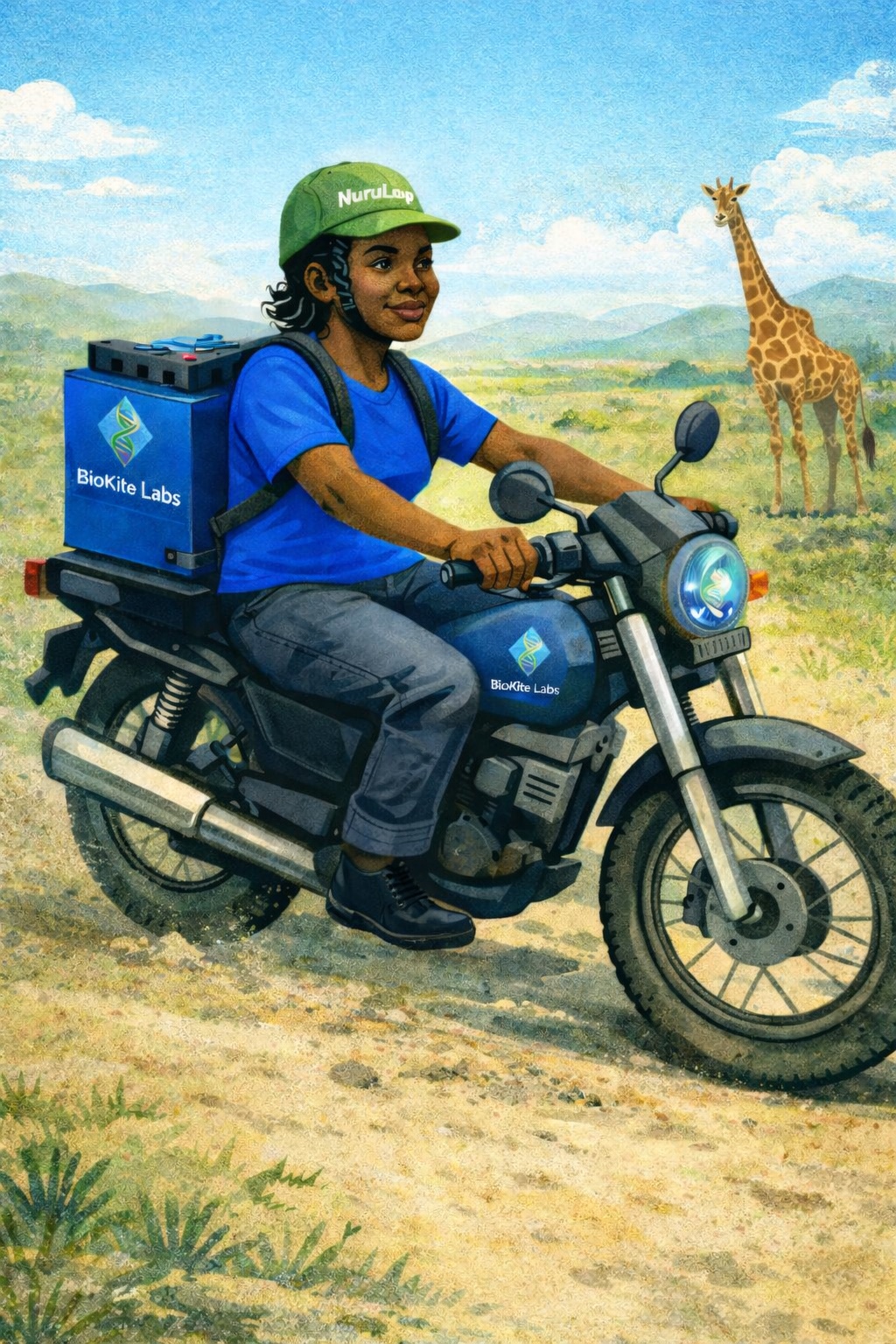
NuruLoop battery delivery by motorcycle across Narok County savanna

NuruLoop: Battery systems delivered and serviced across Narok County by motorcycle.

"Most projects install equipment and leave. We train local people to build and repair the systems themselves. When something breaks, there is already someone nearby who knows how to fix it."

The 4-Pillar Implementation Model

Pillar 1: EV Battery Waste Recovery

Partners with WEEE Centre to collect and test retired EV batteries at minimal cost, converting electronic waste into reliable medical-grade energy storage.

Pillar 2: Local Engineer Training

160-hour certification through Maasai Mara University partnership. Graduates earn the Certified Field Energy Officer title and serve as the permanent technical workforce for their communities.

Pillar 3: Deployment via NuruLoop

Motorbike network delivers battery materials and finished units to remote facilities, enabling maintenance and resupply across terrain that lacks paved roads.

Pillar 4: Remote Monitoring

Weekly uptime scorecards and quarterly impact reports provide continuous visibility into system performance and health outcomes at every deployed site.

Every dollar has a destination.

$50
Wiring and connectors for one complete battery system
Give $50
$500
Train one local engineer through the full 160-hour certification
Give $500
$2,500
One complete LiFePO4 battery unit with solar panel and installation
Give $2,500
$5,000
Power one entire clinic for 7 years with backup energy and trained support
Give $5,000

Any amount helps. All donations processed securely via Stripe.

Where your donation goes.

Every clinic is a real facility serving real communities. Here is the rollout plan.

Olosho-Oibor Dispensary

Serves approximately 3,000 patients. Single nurse-midwife. 4 to 6 power outages per week. First pilot site with operational baseline complete.

Needs Funding

Clinics 2-3, Narok South

Identified and surveyed. Community engagement underway. Details shared with donors upon funding.

Needs Funding

Clinics 4-6

Surveyed and confirmed. Ready for load audits and equipment sizing. Awaiting funding to proceed.

Needs Funding

Clinics 7-10

Memorandum of understanding signed with county health authorities. Site selection in progress.

Needs Funding

Clinics 11-15

Expansion sites unlocked at $50,000+ raised. County infrastructure mapping complete.

Needs Funding

Full Coverage

All 15 clinics operational with trained engineers and NuruLoop maintenance routes established.

Needs Funding

From one county to continent-wide impact.

Phase 1: Narok County (Year 1)

Prove the model in 15 facilities

  • 15 facilities deployed
  • 15 Certified Field Energy Officers
  • 30 battery systems operational
  • Approximately 150,000 lives in catchment
Phase 2: National Expansion (Year 2 to 3)

Scale through government systems

  • Government contracting with Kenyan Ministry of Health
  • Certification program licensed to county health systems
Phase 3: Cross-Border (Year 3 Onwards)

Expand across sub-Saharan Africa

  • 1 to 3 new countries per year
  • Guided by maternal mortality burden and grid reliability data

Every dollar runs the pilot.

Category What It Covers Amount
Battery systems hardware Second-life EV cells, BMS units, inverters, solar panels, enclosures, safety equipment $24,500
Engineer training and certification 15 engineer stipends (12 weeks), training materials, certification, lead trainer $18,000
Clinic deployment and logistics NuruLoop transport, installation, site assessments, community engagement, insurance $9,500
12-month outcomes study Data collection, maternal outcomes partnership, ethics review, data analyst, publication $8,500
Program operations Project manager, communications, field connectivity, translation $7,500
Contingency and financial operations Reserve fund, 501(c)(3) finalization, banking, audit $7,000
Total $75,000

No hidden overhead. No consultants. Unit costs validated through Olosho-Oibor pilot and current supplier pricing.
Research-backed. Field-verified.

+43%
Increase in hospital mortality per outage day exceeding two hours
Apenteng et al., 2018
208
Annual power outages recorded at the first pilot site in Narok County
BioKite field data, 2025
1B+
People worldwide relying on health facilities without reliable electricity
WHO, 2023
$350-$525
Projected cost per life-year saved in the pilot phase, with potential to reach below $105 per DALY at scale. The WHO benchmark for a highly cost-effective intervention is approximately $2,200.
BioKite methodology

Who is behind this.

Sarah Wang, CEO of BioKite Labs

Sarah Wang, MPH

Co-Founder and CEO

Harvard MPH. MIT AI/Data Science. Rose Fellow. Coca-Cola Gold Scholar.

Maison Ole Kipila, Chief of Partnerships

Maison Ole Kipila

Chief of Partnerships

Africa Focal Point, UN Indigenous Peoples Caucus (COP30). UNFCCC/UNCCD delegate.
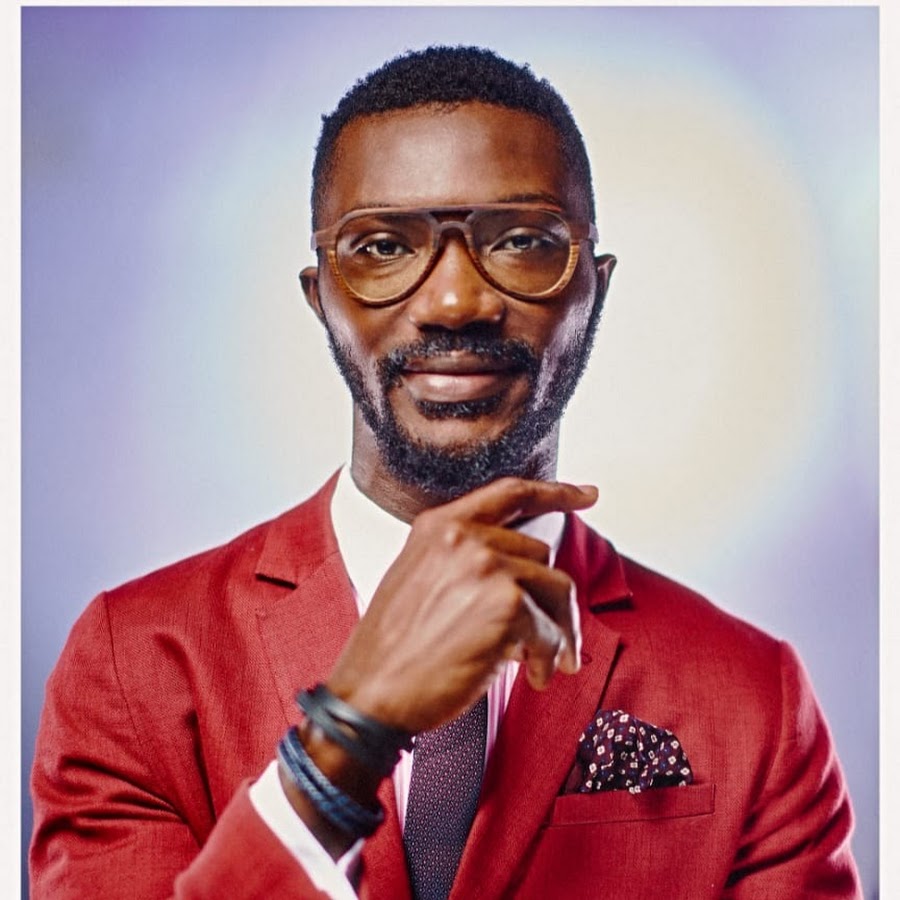
Mike Tuffour Amirikah, Vice President

Mike Tuffour Amirikah, MD

Vice President

Harvard MPH. Executive MBA. 5+ years frontline clinical experience in resource-limited settings.

Our Partners

Maasai Mara University Maasai Mara Youth Council Elongko Africa ACOPPHE Harvard T.H. Chan School of Public Health Stanford University UC Berkeley

Questions from donors.

BioKite Labs has 501(c)(3) status pending. Donations are tax-deductible. Filing before February 2027.
$24,500 for battery systems hardware. $18,000 for engineer training and certification. $9,500 for clinic deployment and logistics. $8,500 for a 12-month outcomes study. $7,500 for program operations. $7,000 for contingency and financial operations. No hidden overhead.
87% of donor-funded solar in Africa fails within five years because no one local was trained to maintain it. BioKite recruits community members and trains them through a 160-hour certification to build and repair systems themselves.
Quarterly impact reports with photos, GPS coordinates, and scorecard data from each funded clinic. You will know exactly which clinic your donation powered.
Narok County MOU on file. 15 engineering students at Maasai Mara University completing certification. WEEE Centre partnership for battery sourcing. Team backgrounds verifiable on LinkedIn.
Yes. Corporate sponsors receive named clinic attribution, quarterly ESG-formatted impact reports, and site visit opportunities. Contact biokitelabs@gmail.com.

$5,000 = one clinic. $75,000 = all fifteen.

Every mother deserves to give birth with the lights on. Fund the pilot that proves backup power saves lives in rural Kenya.

$0 raised $75,000 goal
Donate Now

Secure donation via Stripe. Tax-deductible. Quarterly impact reports.