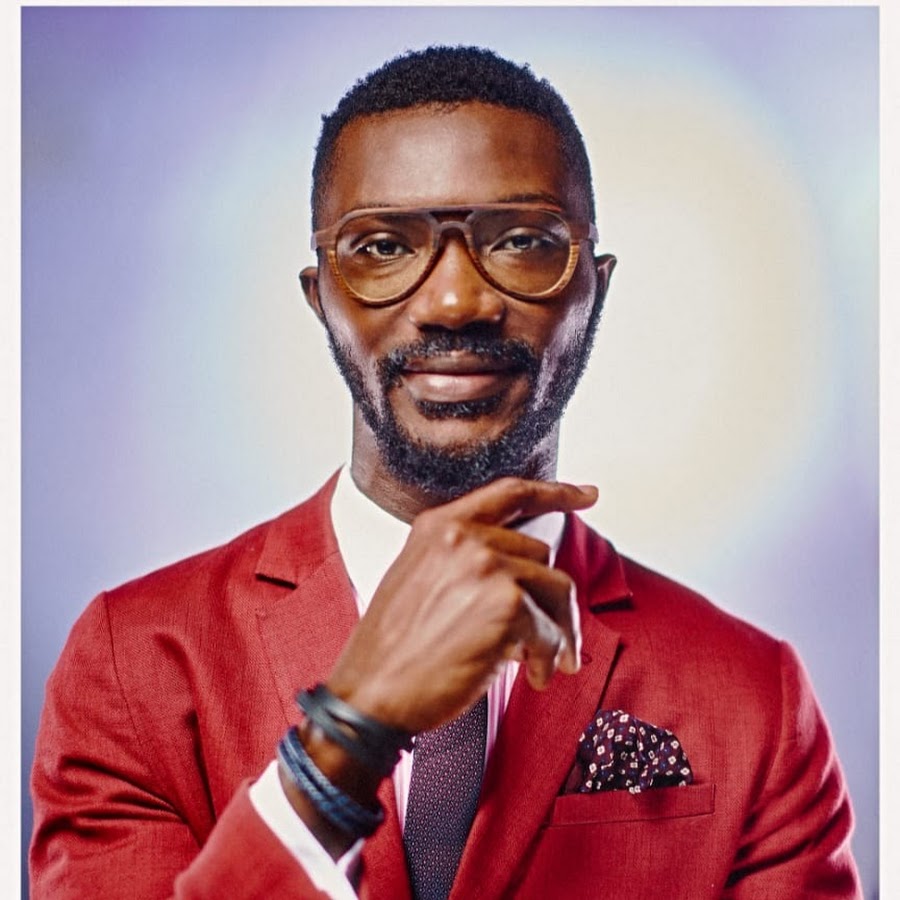
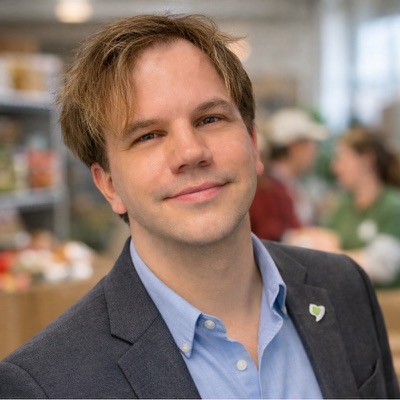
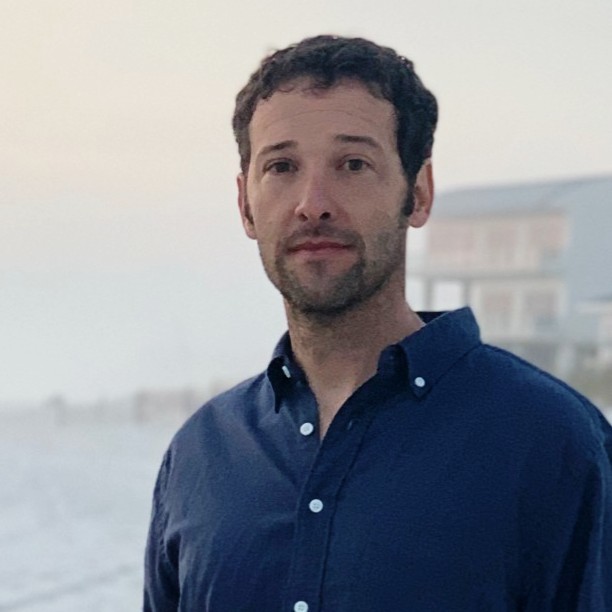
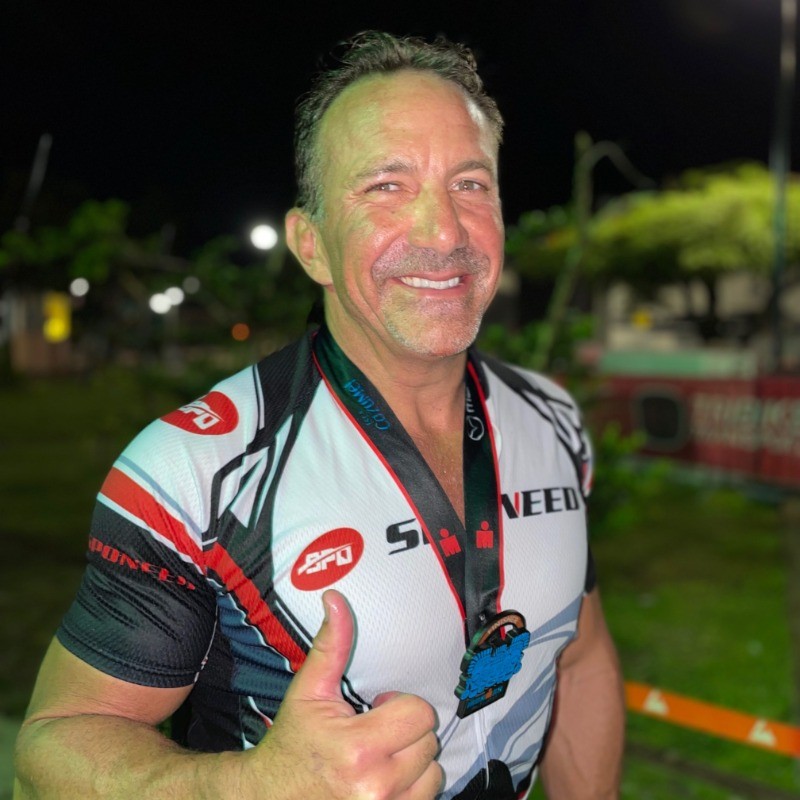
The Founder
My parents are immigrants. The clinics they knew had cracked walls, one bare bulb, and nurses guessing dosages with expired supplies. I grew up with a bone tumor no one could diagnose. I learned early: knowledge is power. Without resources, it means nothing.
I was 19 years old, working $15 an hour at an Italian flatbread shop. My hands still smelled like olive oil and rosemary at the end of every shift. Someone I loved got really sick. I couldn't afford the medical bill. I felt powerless. A friend stepped in and helped me find a way to take care of her. After five sleepless nights on a cold kitchen floor, she unexpectedly got better.
That experience broke something open in me. I promised myself: "I never want anyone to feel this much pain." And I promised God I'd devote my life to making healthcare accessible to the people who need it most.
At the lowest point of my life, my dad grabbed my shoulder and said, "Your body is a temple for your soul." He taught me that the most lasting help isn't a handout. It's building someone's capacity to take care of themselves and their community. That principle became the foundation of BioKite.
That faith took me to Kenya, where a Maasai community leader named Maison became my co-founder and closest partner. Every interview echoed the Clinton Health Access Initiative's "One of the biggest challenges we've seen is solar infrastructure falling into disrepair because maintenance costs weren't properly funded." So we stopped importing solutions. We started building engineers.
I later lost Penelope to inaccessible healthcare: the kind that happens when clinics can't keep the lights on. A phone call saying she passed away at noon. I promised God: I'll devote my entire life to lifting BioKite to success.
That's why I'm dedicating myself full-time to BioKite. The people who need healthcare most are often the ones who can't access it.
Survival depends not just on medicine, but on the available power grid. BioKite Labs exists to solve that.
Power isn't optional. It's whether they come home.
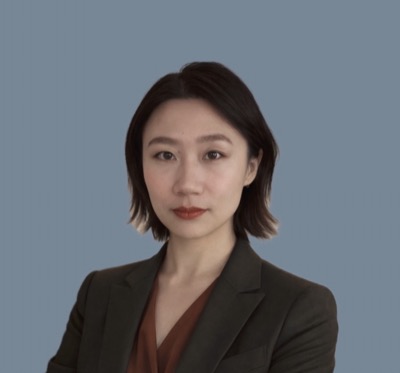
Sarah Wang, CEO, BioKite Labs
The Co-Founder
My Journey to Rural Health Practice
Some of my earliest memories begin on a red-dirt road. Each week, my small hand inside a bigger one, I walked to our neighborhood community health center in rural Ghana to visit a close relative who was receiving palliative care for end-stage disease. It might sound strange to call those visits some of my favorite childhood memories. But they were. They planted something quiet and stubborn in me: the understanding that medicine isn't only about treating disease. It's about showing up for people when the systems built to help them fail.
She died, as too many die in rural Africa. Not from a lack of medical knowledge, but from a lack of the infrastructure that turns knowledge into rescue. That loss, woven together with a deep love for science, set me on the path to medicine.
Growing up in a disadvantaged community in West Africa gave me a front-row seat to the health struggles of my neighbors. I knew early, before I was old enough to fully understand what it meant, that my education wasn't only mine. It was a debt. A responsibility to communities like mine that rarely see doctors who understand what it's like to live there.
During medical school in Europe, I spent my days in immaculate lecture halls and laboratories. But I never let my hands forget the shape of a clinic that runs on prayer. I volunteered with public health screening programs for homeless populations and undocumented African immigrants: the people forgotten twice. I became a vocal advocate for health equity, and through international NGOs, I joined annual rural medical missions across South Sudan, South Africa, Zimbabwe, Ghana, and Malawi. When graduation came, the choice was not a choice. Home. The neighborhoods that raised me. The clinics that ask impossible things of impossible heroes.
Working in rural district hospitals in Ghana opened my eyes to how fragile healthcare becomes when basic infrastructure fails. The prevalence of preventable disease was staggering, made worse by the double burden of communicable and lifestyle-related conditions, in a system held together by determination more than resources.
One night stands out.
It was 2 AM on a busy Wednesday in the obstetrics clinic where I was working. It was the kind of African night where the air does not move and your scrubs are already stuck to your back before the next patient arrives. A young woman came in with prolonged, obstructed labor. She needed vacuum extraction. Possibly an emergency cesarean. Possibly a referral.
Then the power went out.
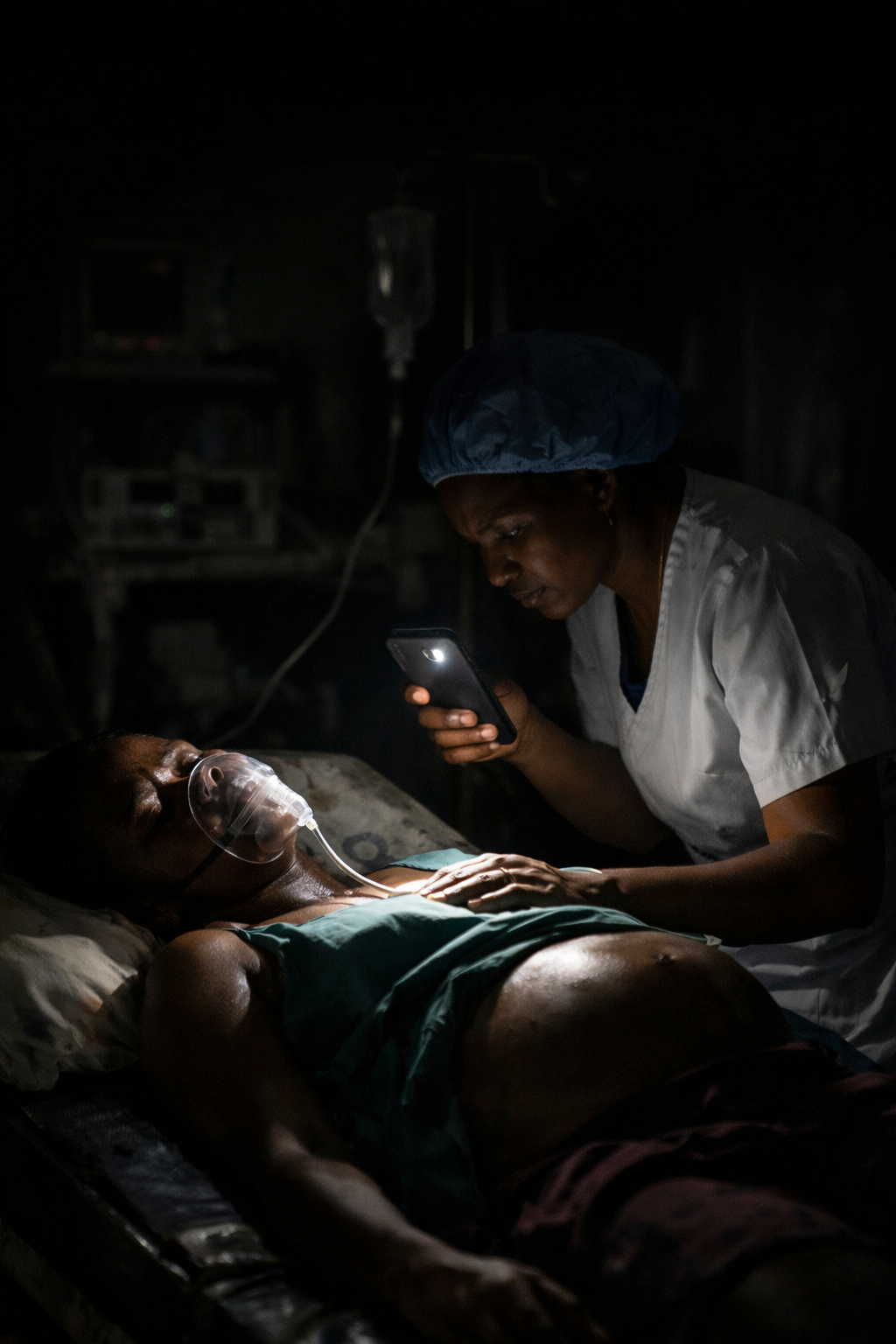
The clinic's solar system had been dead for months. The generator wouldn't start. Fuel pump failure. In an instant, the most consequential moment of this woman's life was happening in near-total darkness. No functional suction. No proper lighting. Just the trembling beams of phone torches and one dying LED lantern, throwing long shadows across the delivery room.
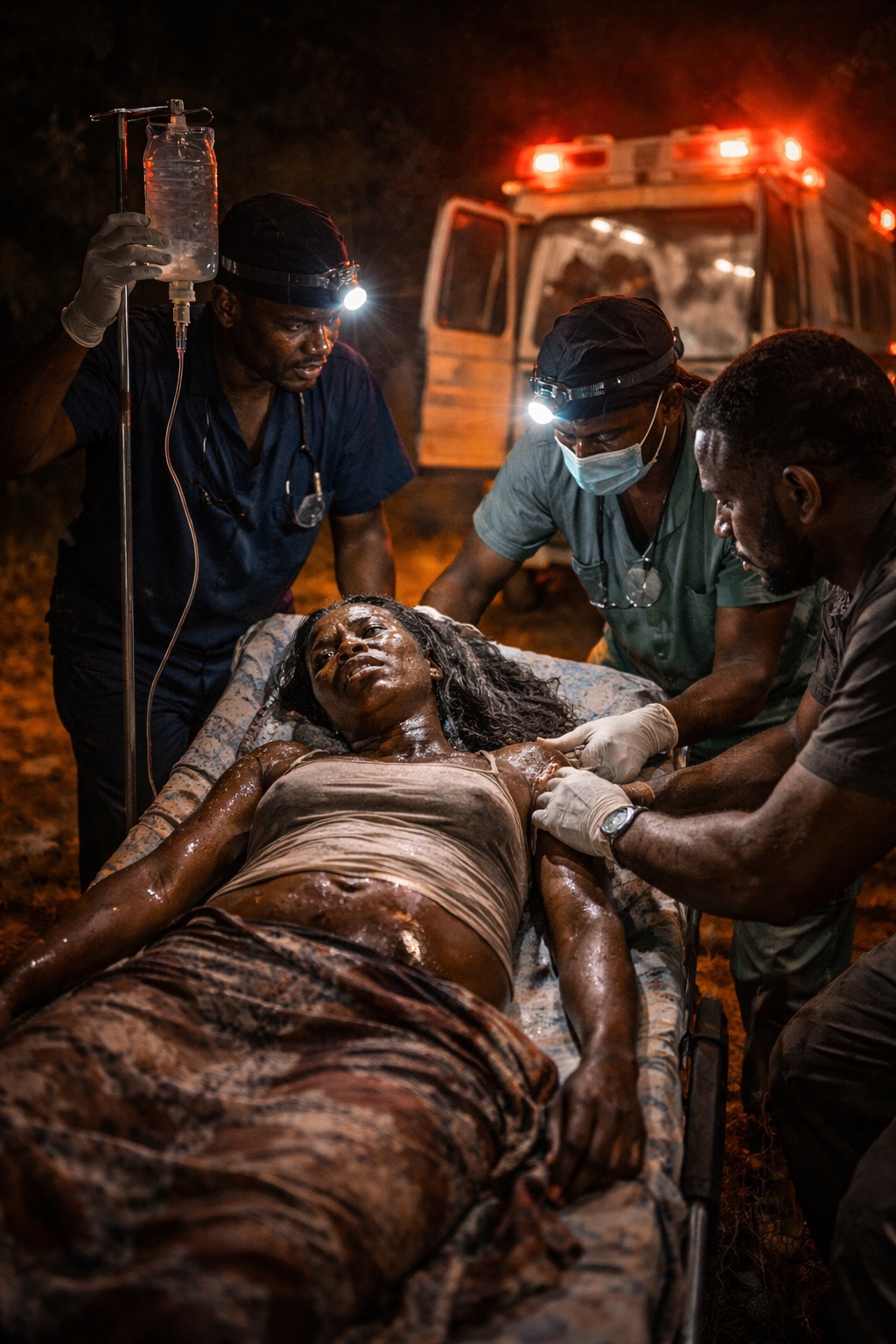
My team and I tried to manage a life-threatening delivery in the dark, improvising with inadequate tools, knowing that every minute increased the risk to both mother and baby. We loaded her into an ambulance and sent her 45 kilometers through the night to the district hospital.
Mother and baby survived.
But survival is not victory. It was a preventable escalation, driven entirely by infrastructure failure. The emotional toll on my team was devastating. We felt like we had failed her, even though the failure wasn't ours. It was the system's. It was every donor who left equipment without a maintenance plan. It was every meeting that called solar “sustainable” without funding what makes it sustainable. It was the silence between a fuel pump breaking and an ambulance arriving in the dark.
That night clarified something I have carried ever since. Clinical skill alone cannot overcome systemic infrastructure collapse. You can be the most capable physician in the world, but if the lights go out and the backup fails, you are reduced to improvisation and prayer. Patients in rural areas deserve far more than that.
Why BioKite
That experience, and dozens like it, taught me that solving healthcare in underserved communities requires more than clinical excellence. It requires building the infrastructure that makes care possible in the first place. At BioKite, I work to ensure that the solutions we design reflect what actually happens in rural clinics when everything goes wrong at once. The only thing left in the room is the people inside it. Because the most vulnerable patients on this planet should not have their survival depend on whether a generator starts, or whether a donated solar system still has working batteries.
Medicine brought me to these communities. The infrastructure failures keep bringing me back to the drawing board, determined, day after day, to fix what should never have been broken in the first place.
A doctor in the dark is alone. Build the light.
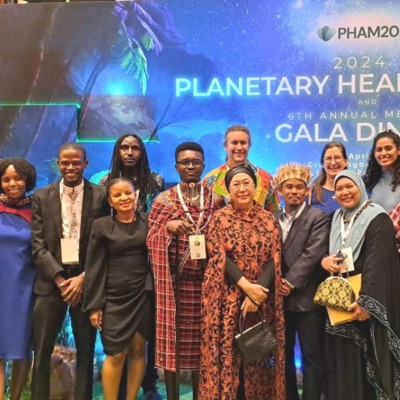
Mike Tuffour Amirikah, MD, EMBA, MPH. Co-Founder & Vice President, BioKite Labs